
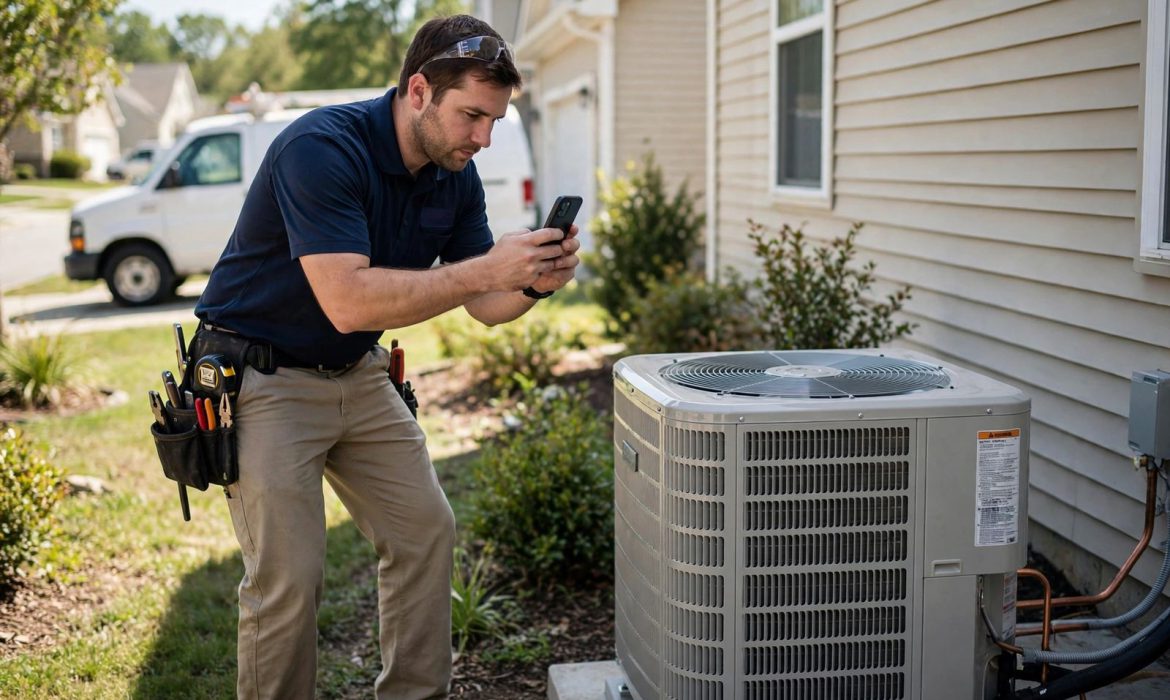
It’s 7:40 in the morning. You’re loading the van, the day is already stacked — two installs, a no-cool call that came in overnight, and a maintenance contract visit across town. Somewhere between the second filter change and lunch, you’re supposed to post on Facebook? Take a photo? Write something clever about capacitors?
That’s the reality of social media management for HVAC companies: everyone knows it matters, nobody on the tools has time for it. So the page sits there — last post from March, a blurry photo of a thermostat, 214 followers who haven’t heard from you in months.
Meanwhile, the competitor three streets over posts every week. Before-and-after install photos. A tech smiling next to a new furnace. “Another family cool for summer” with twelve comments from neighbors tagging friends. When someone’s AC dies at 9pm and they search around, guess whose name they’ve already seen a dozen times?
The Pain: Your Competitor’s Facebook Page Is Quietly Stealing Your Jobs
Homeowners don’t choose HVAC companies from a spreadsheet. They choose the name they recognize — the one their neighbor mentioned, the one whose truck they’ve seen, the one whose posts keep showing up in their feed. Social media is how a small shop becomes “the HVAC guys” in a neighborhood without spending a fortune on ads.
Here’s what an inactive page actually costs you:
- Emergency jobs go to the familiar name. When the AC quits on a 38°C day, nobody researches — they call whoever comes to mind first. An active page keeps you top of mind.
- Reviews die in silence. Happy customers are willing to leave reviews, but only if you ask — and “ask” means a follow-up message, a QR code on the invoice, a reminder post. None of that happens by itself.
- Seasonal work evaporates. Spring tune-ups and fall furnace checks are the bread-and-butter that smooths out your year. The companies that post maintenance reminders in March and September book those weeks solid. The ones that don’t, don’t.
- Young homeowners never find you. First-time buyers in their late twenties and thirties barely use anything except their phones. No social presence might as well be no business.
Why “I’ll Do It Myself” Never Works
Let’s be honest about the math. A decent week of social media for a trades business takes 3–5 hours: taking usable photos on jobs (not blurry, not upside-down), writing captions that don’t sound like a robot, replying to comments and DMs, posting consistently, and once in a while boosting a post that deserves it.
That’s 3–5 hours you’re not billing. At a typical HVAC labor rate, that’s $300–$600 of lost revenue every single week — $15,000–$30,000 a year — spent doing something you’re not trained for and probably don’t enjoy. And it still fails, because consistency is the whole game and you’re on a roof when the algorithm wants Tuesday’s post.
Hiring someone in-house isn’t better for most shops. A part-time social media hire runs $1,500–$2,500 a month, needs managing, takes holidays, and still needs you to explain what a heat pump is every other week.
What Done-for-You Social Media Management Actually Includes
A proper service isn’t “we post for you.” It’s a small marketing department that happens to understand the trades. Here’s what should be on the list:
- Content calendar built around your seasons — tune-up pushes in spring, furnace content in fall, indoor air quality in winter, emergency availability during heat waves.
- Before-and-after job photos, handled properly — your techs snap quick photos on the job; the provider edits, captions, and posts them. This is the single highest-performing content type for HVAC, and it costs you thirty seconds per job.
- Review generation and replies — follow-up messages to happy customers, responses to every Google and Facebook review (yes, even the unfair ones — especially those).
- DM and comment monitoring — someone answers “do you service [town]?” within the hour instead of three days later.
- Monthly reporting you can read in five minutes — reach, engagement, and most importantly: how many quote requests came from social.
What it should NOT include: generic stock photos of smiling families, posts about “National HVAC Technician Day” with no local angle, or a content calendar full of filler that could belong to any business on earth.
Honest Pricing: What SMM for HVAC Companies Costs in 2026
Let’s be straight about what the options cost — and then where we fit in:
| DIY (your evenings) | Freelancer | Done-for-you agency | In-house hire | |
|---|---|---|---|---|
| Monthly cost | $0 cash, 12–20 hrs of your time | $400–$900 | Custom quote* | $2,500–$4,500+ |
| Posts per week | 0–1 (inconsistent) | 2–3 | 3–5 + stories | 3–5 |
| Review management | No | Sometimes | Yes | Yes |
| Ad management | No | Rarely | Usually included or add-on | Yes |
| HVAC/trade knowledge | Yours | Hit or miss | Built in | Learns over time |
*No fixed price list — because no two shops have the same needs. Here’s our promise instead: a custom quote built to cost you significantly less than the $2,500–$4,500+ a month an in-house hire runs, with the work done properly. That’s the whole point of outsourcing — the expensive problem (hiring in-house) disappears, and you get a team that knows the trades.
For a 2–10 tech shop, done-for-you is usually the sweet spot: it actually gets done, every week, without adding headcount. Below $500/month, be skeptical of anyone — at that price nobody is writing real captions or answering your DMs; they’re scheduling stock photos.
One recovered install job — a single $8,000–$12,000 system replacement that came from someone who’d been following your page — pays for the entire year.
Where we come in: Backend Communications runs social media for HVAC companies at a cost designed to beat in-house hiring — done right, with real captions, review management, and reporting. Request a free quote and we’ll give you an honest number for your shop.
The Content That Actually Books HVAC Jobs
Forget viral. HVAC social media wins with boring, consistent, local content:
- Before-and-after installs — the money content. A rusted 20-year-old unit next to a gleaming new system tells the whole story in two photos.
- Tech spotlights — “Meet Dave, 14 years in the trade.” Homeowners let strangers into their houses; faces build trust faster than any ad.
- Seasonal reminders with a booking link — “Furnace tune-up season is here — 6 slots left this week” outperforms any generic brand post 10 to 1.
- Review screenshots — a five-star review shared as a graphic is social proof that compounds.
- Simple education — “Why your AC freezes up” in 40 seconds of video positions you as the expert and gets shared in local groups.
Notice what’s missing: memes, motivational quotes, and anything your customers can’t connect to a truck rolling up their driveway.
How to Pick a Provider That Actually Gets the Trades
Ask these three questions before signing anything:
- “Show me another trades client.” If all their examples are boutiques and realtors, they’ll post your company like a boutique. You need someone who knows what a condenser is.
- “Who writes the captions, and do I approve them?” You want a yes to approval — at least for the first 60 days. A provider who resists owner review is planning to phone it in.
- “What happens when there’s a bad review?” The answer should be a clear protocol: acknowledge publicly within hours, take it offline, follow up. If they shrug, walk away.
And the red flag test from every other outsourcing decision: if they can’t describe their process clearly — onboarding, content approval, reporting — they don’t have one.
Frequently Asked Questions
How much does social media management cost for an HVAC company?
A freelancer runs $400–$900/month, and an in-house hire costs $2,500–$4,500+ a month once you count salary and overhead. Our done-for-you service is quote-based — no fixed price list, because every shop’s needs are different. What we promise: a custom quote built to cost significantly less than hiring in-house, with real captions, review management, and reporting done properly. Request a free quote →
How many posts per week do we actually need?
Three to five posts a week plus stories is the sweet spot for a local HVAC company. Less than that and the algorithm forgets you; more than that and you’re burning money for diminishing returns. Consistency beats volume — three good posts every week for a year beats fifteen posts in January and silence after.
Will the content sound like a real HVAC company, not a marketing agency?
It should — if the provider is set up for the trades. Your techs provide the raw material (job photos, quick notes from the field), and the provider turns it into proper posts in your voice. You approve everything for the first 60 days. If a provider won’t show you trades-specific examples, don’t hire them.
How long before we see results?
Follower growth and engagement: 60–90 days. Actual booked jobs attributed to social: typically 3–6 months of consistent posting. Anyone promising jobs in week two is selling you ads, not organic social media — and there’s nothing wrong with ads, but they should say so honestly.
Stop Letting the Quiet Weeks Win
Your slow seasons aren’t a weather problem — they’re a visibility problem. The shops that stay booked year-round aren’t luckier; they’re the ones homeowners already know by name when something breaks.
Book a free 15-minute growth call and we’ll look at your current social presence, tell you honestly what’s working and what isn’t, and map out what done-for-you management would look like for your shop — even if the answer is “not yet.”